The rain that turns Phuket lush and green also fills every bucket, gutter, and plant pot on the island — and that quiet standing water is exactly where dengue fever begins. From June through October, as the monsoon settles in over Karon Beach, Kata, and the wider Phuket coast, cases of dengue rise across Thailand. It is one of the most common illnesses we see in travellers during the wet season, and one of the easiest to misread as “just a bad flu.”
This guide explains what dengue is, how to recognise it early, and what you can do to stay safe during your stay in Phuket. None of this replaces seeing a doctor — but knowing the signs can help you act quickly.
Why dengue rises during Phuket’s monsoon season
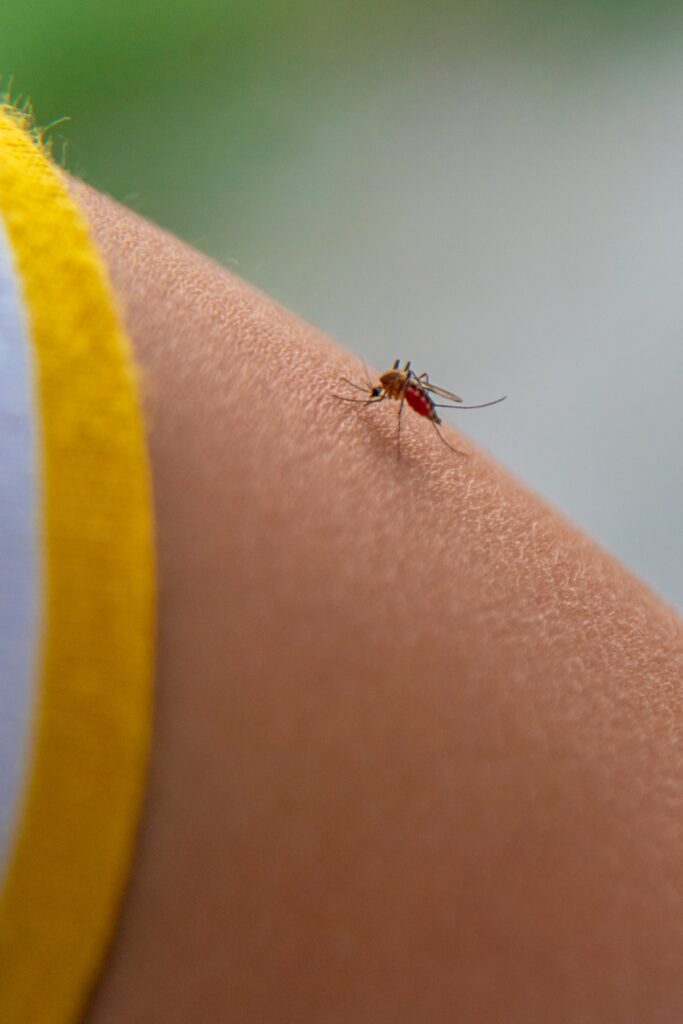
Dengue is spread by the Aedes mosquito, which thrives in the warm, wet conditions of the Thai rainy season. Unlike many mosquitoes, Aedes bites mainly during the daytime — often in the early morning and late afternoon — and breeds in small pools of clean, still water.
After heavy showers in Karon and Kata, that water collects everywhere: flower pots, discarded cups, blocked drains, even the saucers under garden plants. Within days, a single puddle can become a breeding site. This is why dengue tends to climb just as Phuket’s monsoon reaches full strength in June.
The good news: dengue is preventable, and with the right care most people recover well. Awareness is your best protection.
Dengue symptoms to watch for
Symptoms usually appear 4 to 10 days after an infected mosquito bite. They can come on suddenly and may feel similar to flu, which is why dengue is often missed at first. Common signs include:
- Sudden high fever
- Severe headache, often with pain behind the eyes
- Strong muscle and joint pain (dengue is sometimes called “breakbone fever”)
- Nausea or vomiting
- A skin rash, often a few days after the fever starts
- Tiredness and loss of appetite
If you develop a high fever during or shortly after time in Phuket, it is wise to see a doctor rather than wait it out. Early advice makes a real difference.
Warning signs that need urgent care
Most dengue cases are mild, but a small number become serious. Seek medical help immediately if you or someone with you experiences:
- Severe stomach pain
- Repeated vomiting
- Bleeding from the gums or nose
- Blood in vomit or stool
- Difficulty breathing
- Extreme tiredness, restlessness, or cold, clammy skin
These can be signs of severe dengue, which is a medical emergency. Our Doctor On Call 24/7 service can reach you at your hotel anywhere in the Karon and Kata area, day or night.
How dengue is diagnosed
Dengue is confirmed with a simple blood test, not by symptoms alone — which matters, because the early signs overlap with flu, COVID-19, and other tropical illnesses. A test helps your doctor understand what you are actually dealing with and plan the right care.
At Doctor Karon Clinic, our on-site laboratory can carry out dengue testing quickly and confidentially, so you are not left guessing. If you have had a fever for more than a day or two, getting tested is one of the most useful steps you can take.
How to protect yourself from dengue in Phuket
Prevention is straightforward, and a few habits go a long way during the rainy season:
- Use mosquito repellent with DEET or picaridin, especially in the morning and late afternoon.
- Cover up with light, long-sleeved clothing when you can.
- Sleep protected — use air conditioning, screens, or a mosquito net.
- Remove standing water near your room or villa: empty pots, cups, and containers after the rain.
- Choose accommodation that manages drainage and mosquitoes well.
A general note that often helps travellers: doctors usually advise against using aspirin or ibuprofen for an unexplained fever in dengue regions, as these can increase bleeding risk. If you are unsure what is safe, ask a doctor first — we are always happy to advise.
FAQ
Is dengue common in Phuket? Dengue is present in Phuket year-round but rises during the monsoon season, roughly June to October, when rain creates more mosquito breeding sites. Taking simple precautions greatly reduces your risk.
What are the first signs of dengue fever? The earliest signs are usually a sudden high fever, severe headache, pain behind the eyes, and strong muscle or joint pain. Symptoms typically appear 4 to 10 days after a mosquito bite.
How do I get tested for dengue in Karon Beach? A simple blood test confirms dengue. Doctor Karon Clinic in Karon Beach offers fast, confidential dengue testing with on-site laboratory results and English-speaking doctors, with walk-in availability daily.
Can dengue be treated? There is no specific cure, but most people recover with rest, fluids, and supportive care such as fever management and, when needed, IV drip therapy. Early medical advice helps prevent complications.
How can tourists avoid dengue in Phuket? Use mosquito repellent (especially in the morning and late afternoon), wear light covering clothing, sleep with screens or a net, and remove standing water near your accommodation.
Feeling unwell in Karon or Kata? We’re nearby
Doctor Karon Clinic is located in the heart of Karon Beach, Phuket, with English-speaking doctors and walk-in availability seven days a week. Whether you need a quick dengue test, treatment for fever and dehydration, or IV drip therapy to help you recover, our team is here to help you feel better fast — and get back to enjoying your trip.
Open daily, 9:00 AM – 9:00 PM · Doctor On Call 24/7 across Karon & Kata